
The night before the Olympic 10K interval start in Tesero at the 2026 Winter Olympics, John Steel Hagenbuch drew the entire course from memory with his eyes closed. Every turn. He'd been running intervals on it for days.
Then the gun went off, and about a minute in, he took a wrong turn.
“I barely remember the first minute of the race. I was so in it. Just autopilot, just going.”
In the race footage, you can see the exact moment he snapped back, did an immediate 180, and kept going. He finished 14th. He might have been 8th. Every reporter in the mixed zone asked the same question: are you upset?
“I don't know, man. What should I be upset about? It's a beautiful day, the sun's shining, all of my friends and family are here. Could I have been 8th instead of 14th and gotten to sit in a leader's chair for a little bit until all the Norwegians came in and beat me? Yeah, that would have been nice. But it really just doesn't matter.”
The wrong turn, he'll tell you, was actually proof he'd gotten the race right.
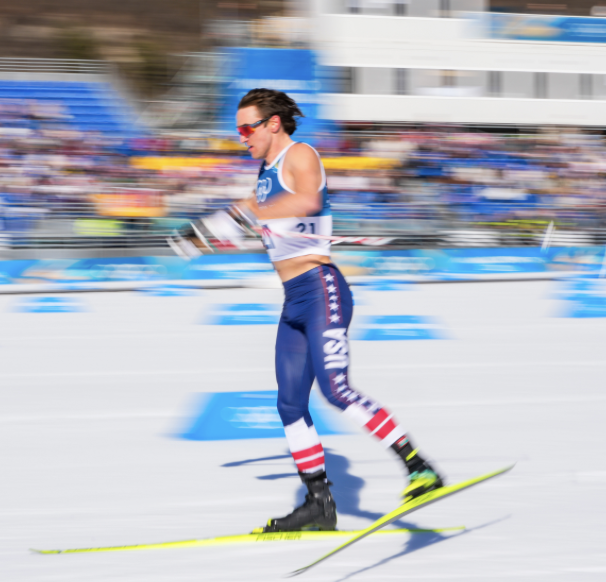
“My goal in that race was just to be present and try as hard as I could. I skied every part of the course, including a little bit extra, as hard as I could. The only thing I could do is keep pushing forward, hopefully in the correct direction.”
Photo Credit: NordicFocus
The Pain Cave
Ask Hagenbuch what goes through his mind in the pain cave, and he pushes back on the premise entirely.
“The races that are truly really hard are often your bad races. When something's going wrong, that's pain cave. But the place where you're truly present and just going as hard as you can? It's more flow state than anything else.”
There’s a whole mythology around suffering in endurance sports. The harder it hurts, the more you care, the more you're getting out of it. Hagenbuch is saying the opposite might be true.
For him, flow state has three conditions. You need to feel good. You need to have good skis. And you need to execute your race plan. And when everything comes together? You’re just moving.
Big Goals and Big Green
For three World Cup seasons, Hagenbuch has pushed through the stretch from mid-November to March, beginning in cold, dark Finland, isolated, singularly focused. He was eagerly anticipating NCAA racing on the other side.
“The biggest thing I’ve realized in my time at Dartmouth is I've truly embraced the fact that it's not about the racing. It's about everything else.”
Hagenbuch’s “everything else” is grounded in the people.
“Cross-country skiing affords you the opportunity to be very present: present with yourself, present with amazing people in amazing places, moving your body outside in the sun, smiling. That's what's really appealing to me. The lifestyle. The people. The places.”
With long-time Sun Valley friends like Peter Wolter officially announcing their retirement, Hagenbuch has been especially ruminating in his post-season reflections this year.
“There’s the old saying of if you want to go fast, go alone. But if you want to go far, go together. And if my guys are retiring…how am I gonna go together?”
Meme Mode
In reflections thus far, he’s landed on meme mode.
“My goal for this spring is to be on meme mode. What I mean by that is: I'm gonna enter every interaction with a mild level of amusement. And never take it below a mild level of amusement. Only higher.”
That mild amusement held in front of every Olympics reporter who came looking for anger and grief. Turns out a wrong turn in the biggest race of your life is a pretty good stress test for your default setting.
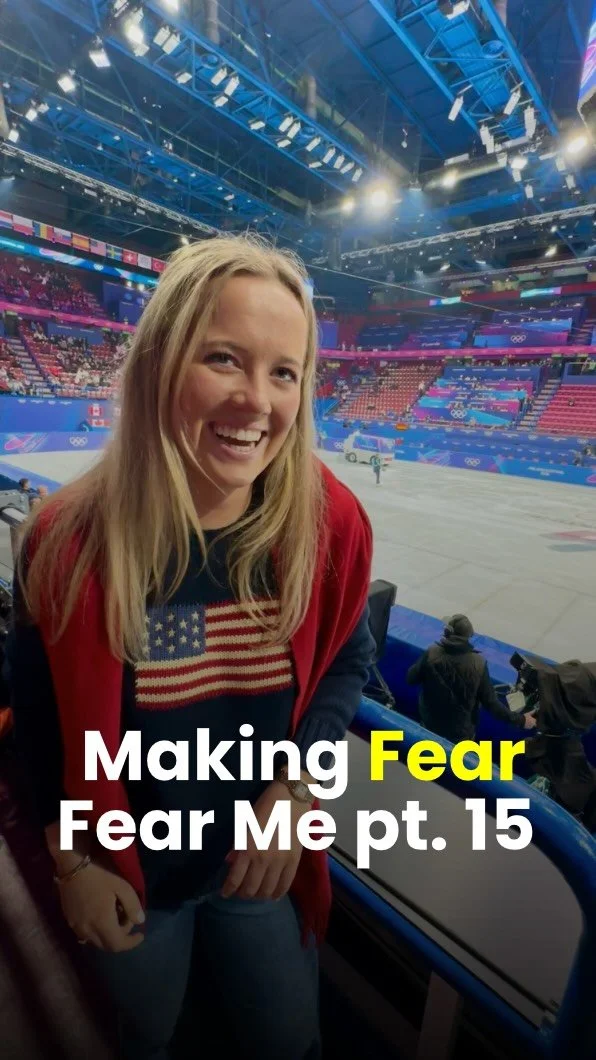
ABOUT THIS SERIES
I'm Amy Wotovich and I’m on a mission to interview 100% of Team USA's 2026 Olympic and Paralympic athletes to create the most comprehensive mindset record of a single Games cycle. What do elite competitors actually believe about pressure, identity, failure, and joy? John Steel Hagenbuch is one of hundreds of athletes sharing their unfiltered stories. Follow the journey!
