
Joe Pleban doesn't remember what place he finished. He remembers the number on the clock.
When Pleban crossed the finish line on his second banked slalom run at the Milano Cortina Paralympic Games, with screws and a surgical plate holding his wrist together, he pumped his fist and dropped an f-bomb. He was, by every visible measure, elated.
He had finished 11th.
"The cameras are probably sitting there going, he just got 11th place, why is he goofing?" Pleban says, laughing. "It's because I dropped a second."
That distinction, between where you place and how you ride, is a mentality so deeply embedded in Pleban’s life that it predates snowboarding entirely. It comes from a pool.
Owning His Lane
Growing up, Pleban was a competitive swimmer. He specialized in sprint freestyle and wanted nothing to do with anything above a 200m.
"If my coach put me in anything that was like a 200 or more, I was like, come on, dude, that's too many turns."
In his early swimming career, he built a mindset that most athletes spend careers chasing.
"My place was how good everyone else did," he says. "My time was how good I did."
Pleban learned that he couldn't control the lane next to him. But he could control the training he put in. So effort became his “North Star” metric: his time versus his time, his effort versus his effort. Everything else was noise.
After sustaining an injury in a wakeboarding accident and developing a rare condition called pigmented villonodular synovitis (PVNS), Pleban became an amputee. Navigating rehab and recovery, Pleban drew upon this “control the controllables” mentality built in swimming and put it to the test when he discovered para snowboarding.
The philosophy did exactly what it was built to do and carried him to a Paralympic start gate in the Italian Alps. But it wasn’t easy to get there.
His Early Career
Pleban had competed with the full-send mentality for most of his early career. New tricks. Big hits. He had a willingness to try a new skill on snow before talking himself out of it.
Then, his daughter was born. When standing at the top of the course, Pleban started doing math he'd never done before.
"What if I really break myself off?" he remembers thinking. "Then how am I going to go home and be a present father? My 100% effort each day started to look different... I couldn’t spend an entire 100% on just working out in the gym. It was okay I have to pick up my daughter, and then when we get home, we're playing, we're doing a project, we’re making dinner."
He's not embarrassed to say that hesitation crept in and the what-ifs piled up. Reconnecting with his original fearlessness, which came so naturally at 18, became its own season-long goal.
"Part of my mental game heading into this Paralympics was really reconnecting with my original fearlessness."
The Bench
It took hard work and a support system he trusted enough to fall back on. And it took learning to sit with the thing that was scaring him rather than fight it.
When describing this time, Pleban laughs: “It’s funny because for a while I was so caught up in the pressure of competing and all. And when you try to not think about it it’s like, ‘Hey, whatever you do, don't think about a pink elephant.’ You're immediately, boom. Pink elephant."
So his sports psychologist gave him an image of a park bench. Whatever pressure you're carrying, visualize it as something sitting next to you. Don't push it away, nor pretend it isn't there. Just let the pressure take a seat right beside you.
"I'm not gonna push you away," Plebin says, describing the exercise. "I know you're there. I'm just going to allow you to sit next to me. I can still look forward. I can still compete"
At the Paralympics, standing in the start gate while cameras rolled and four years of preparation compressed into two runs, he let the pressure take a seat on a bench next to him.
"There's nothing I was going to change at that point," he says. "So I just let the pressure be."
And then he competed.
Your Takeaway
Across my conversations with the 2026 U.S. Olympic and Paralympic Team, the phrase "control the controllables" comes up more than almost any other. But Pleban puts his finger on something more specific — your place is how good everyone else did. Your time is how good you did.
He built this mentality in a pool as a teenager and carried it to a Paralympic start gate in 2026. The scoreboard tells you where you landed relative to everyone else in the field. It tells you almost nothing about whether you actually got better. Those are two different questions, and most of us spend our lives tracking the wrong one.
Think about where you're measuring yourself against others right now. A colleague's career trajectory. A friend's relationship. Someone else's timeline for what your life should look like by now. That's the place. You can't control it. You never could.
Your time is different. Your time is the effort you put in today versus yesterday. The conversation you showed up for. The thing you tried before you talked yourself out of it. That's the only metric that actually belongs to you.
The question worth sitting with: where are you racing someone else's race? And what would it look like to get back in your own lane?
Pleban is already back in his. France is in 2030.
"This was just the aperitif," he laughs.
ABOUT THIS SERIES
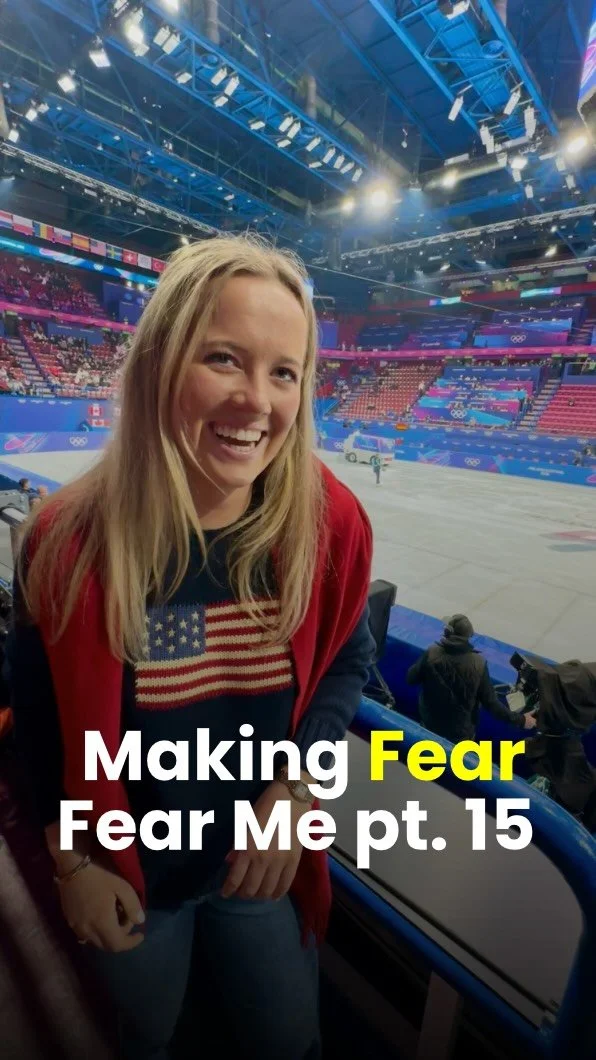
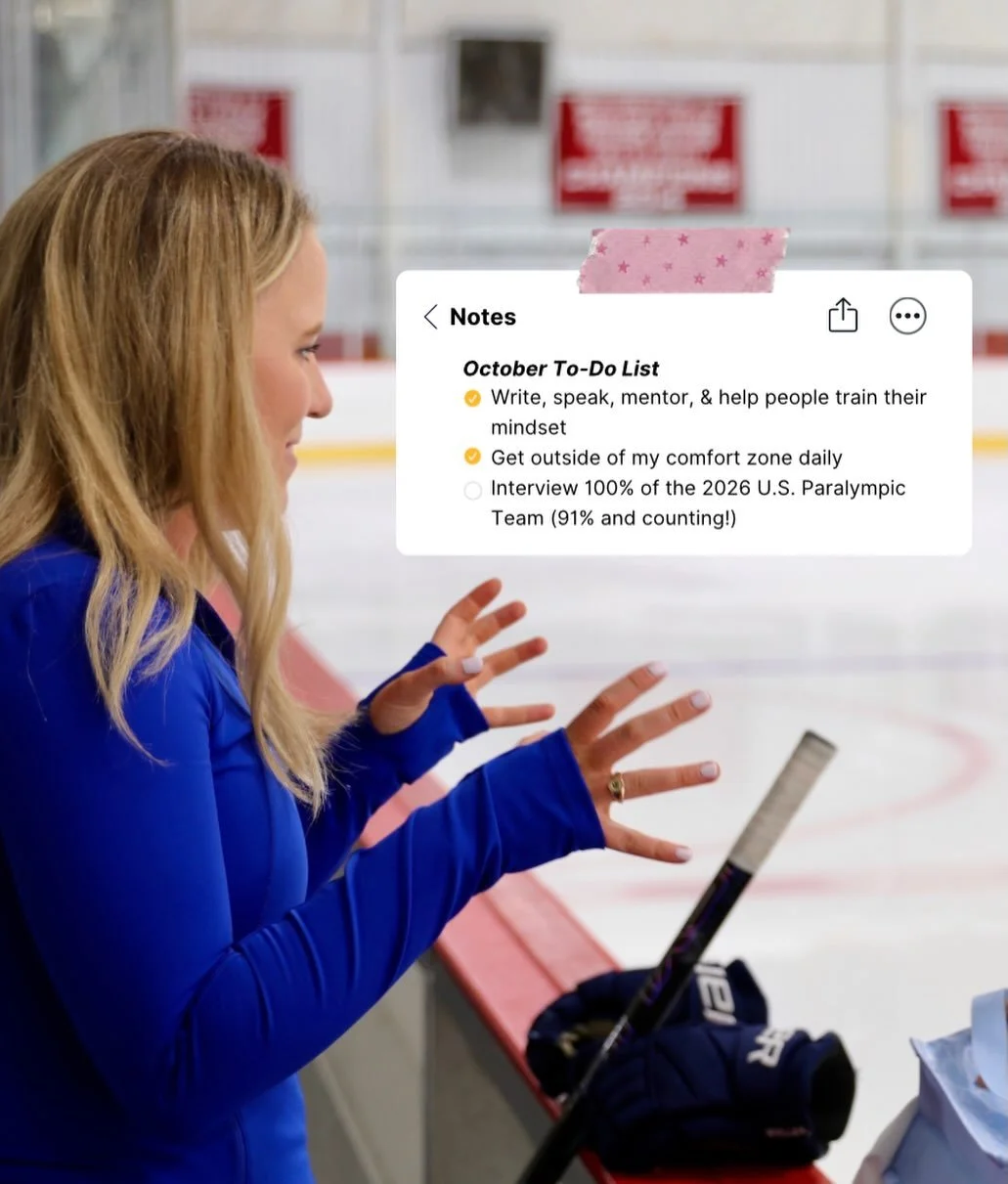
I'm Amy Wotovich and I'm on a mission to personally interview 100% of the 2026 U.S. Olympic and Paralympic Team. How do elite athletes train their mindset, overcome failure, sustain dominance, and compete with confidence? Follow the journey to find out as Joe Pleban is one of 304 athletes sharing their unfiltered answers.
