
Resetting After Each Shot (in Life and in Curling) With Katie Verderber
A first-time Paralympian, Katie Verderber focuses on bringing a resilient mindset to competition.
Part of maintaining that resilience is establishing a "what's next" mentality. There are plenty of moments between shots where doubt can creep in. That's when Verderber and her teammates show up for each other.
"As a team, we're really focused on keeping our energy up, and for us, we've figured out that high-fiving after every shot no matter what happens. It's forcing us to go into autopilot and not get lost in that last shot."
But what happens when Verderber goes 10 to 15 minutes between her shots? It can be easy to let the mind dwell on negative thoughts, especially after a poor one. That's when she resolves to stay engaged in the present, whether it's watching lines, timing rocks, or even humming a song in her head to break a negative thought pattern.
"We know there's gonna be moments, and there's gonna be tough games. And we've got to find a way to lean on each other, lean into those resets for everybody…because everybody's a little different."
Learning teammates' tendencies under pressure couldn't be more important in a team sport like curling. "There's so much more to athletics than just being good at the sport you're doing," says Verderber. Performance is as much about centering your thoughts as it is about skill.
Finding Curling After Life Threw a Curveball
Verderber is no stranger to maintaining a strong mindset and embracing new beginnings.
Her life in a wheelchair began in October 2023. Just six months later, in April 2024, she picked up curling. Still adjusting to her new reality, Verderber reflects that the sport was a welcome distraction at first.
"I was super focused on seeing where this curling thing can take me that I don't have to worry about everything else going on…mainly the grappling with being paralyzed and the effect that had on other parts of my life."
Two years later, she can look back and see how curling helped her heal, giving her energy a purpose beyond herself.
"It was something that was driving me to be good at it that forced me to look back at my relationships and want to be a better person," reflects Verderber. "Because of curling, there's so much more I can be doing. I don't want to just be a Paralympian. I just want to be a good person in my life."
More Than a Game
Verderber is quick to acknowledge how sports are a powerful metaphor for life itself. Through the pursuit of being named to her first Paralympic team, she’s leaned into the power of showing up fully: without fear of regret, without crippling self-doubt, and with unconditional support for the people around you.
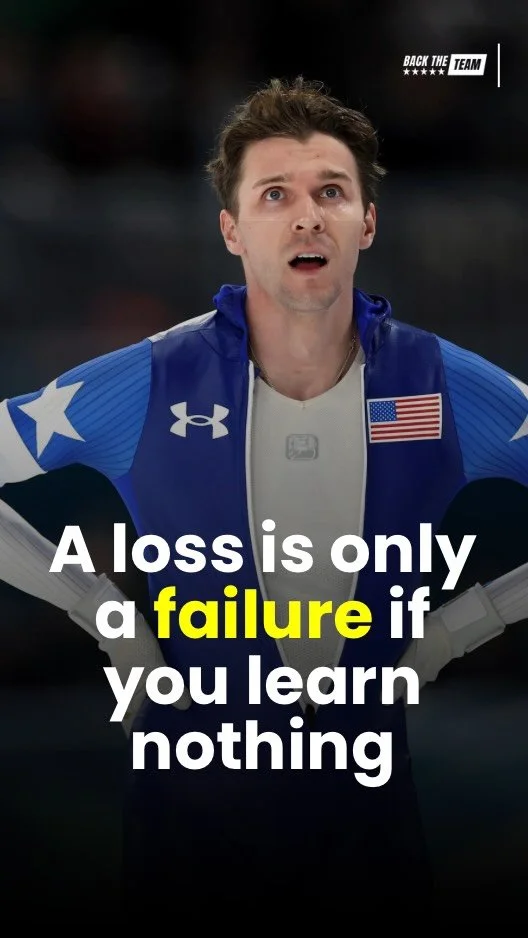
In curling, Verderber has built a track record of picking herself up after a shot doesn’t quite go to plan. Eventually, it clicked that picking herself up after a bad day was no different. "It kind of just eventually clicked that I will naturally have really bad days. But I now know I'm able to pull myself out of it. Life is no different than curling," she says.
There’s such power in her mindset that extends far beyond the rink.
"I want to be a good person and a good teammate for everybody else in my life who's been with me the whole time."


ABOUT THIS SERIES
I'm Amy Wotovich, and I am on a mission to interview 100% of Team USA's 2026 Olympic and Paralympic athletes to create the most comprehensive mindset record of a single Games cycle. What do elite competitors actually believe about pressure, identity, failure, and joy? Katie Verdeber is one of hundreds of athletes sharing their unfiltered answers. Follow the journey!