
Olympic Silver Medalist, Cory Thiesse, Leaving No Stone Unturned
Cory Thiesse was twelve years old when she held an Olympic bronze. John Schuster had brought his 2006 medal with him to Tuesday night juniors at the Duluth Curling Club. He let the kids pass it around, feel the weight, and hold it, and Cory has never forgotten what that moment planted in her mind.
"It helped me sort of realize my dreams," she says now, two decades later and one Olympic medal of her own. "Like, maybe I could go and do this someday. This is somebody from our club that grew up in Minnesota and went to the Olympics and won a medal. How cool."
Just a few weeks ago, Cory Thiesse became the first American woman ever to stand on an Olympic podium in curling. A silver medalist in mixed doubles curling at the 2026 Milano Cortina Games has cemented her legacy in all-time American curling history.
The Long Game
Thiesse was born into curling. Her mother curled competitively, and there are stories — her mother tells them with delight — of baby Cory in a car seat at the club, watching practice. The ice was her first home before she could walk on it. Her mother later became her junior coach.
That foundation is part of what made the long road to the Olympics possible to sustain. There were lost national finals. Multiple Olympic trials defeats. Friends and teammates who headed off to lives that didn't have room for training schedules and missed weekends. Thiesse stayed. She stretched her undergraduate degree, taking semesters off when curling demanded it. She found a support system — a husband, parents, a job working for her mother's company — that could flex around the sport.
"I've just never lost sight of the goal. I've always believed that if you work hard enough towards something, it will happen someday. At the end of the day, I love the sport. I love always learning and getting better and growing." — CORY THIESSE
Cory’s Mental Architecture
Her mixed doubles partner, Korey Dropkin, says it plainly: “I'll bring the energy, but Cory keeps us steady. On the ice, Cory is famously unreadable. Opponents cannot tell whether she's winning or losing and journalists used to ask her why.”
"I'm just so laser-focused on what's happening on the ice," Thiesse explains. "Years of being concerned with the outcome…I've really just focused in on the process. Not overthinking things. Just being super present."
Believe it or now, finding calm on ice has been a deliberate part of her training. For the past four years, Thiesse and her team have worked intensively with a sports psychologist. "Curling is actually a lot like golf," she notes. "It's a mental game. We have to train our brain as much as we train our bodies."
"Those competition butterflies and that nervousness…it's something that’s hard to mimic in any other aspect of life. To be able to perform well when you're feeling that is a skill that I train." — CORY THIESSE
Central to her mental training toolkit is visualization. When her team qualified for the Olympics last May, she began visualizing.
“We knew that we qualified for the Olympics back in May of last year, so I had been visualizing myself in that arena. Our coach had actually been in the arena for the Junior Worlds, so she took a bunch of videos and photos. I had a pretty good idea of what it looked like. So for me, I started being super focused on all the little details of physically being in the arena. Fans in the stands, my family in the stands. Throwing a good stone, making a shot to win a game…” — CORY THIESSE
She played the final stone over and over in her mind, months before she ever stepped on Olympic ice. And when a high pressure moment came, she’d been there countless times already.
“We had this big semifinal game against Italy, where if we won, we went to the gold medal game. And when I made my last shot to win, and everybody afterwards was like, 'Weren't you nervous? How'd you do it?' And I'm like, I've literally played through that shot a million times in my head. So for me out there, it was just like, okay, take a deep breath. I've done this a million times. And I just knew that I was gonna make it. Visualization has been such a powerful tool for me, especially within the last 4 years." — CORY THIESSE
She made it. Dropkin and Thiesse were gold-medal game bound.
The Busiest Month of Her Life
Competing in both mixed doubles and women's curling meant Thiesse was on the ice almost every single day of the Games. She had known it was coming and had prepared herself emotionally for the fatigue the same way she'd prepared for everything else: by naming it, accepting it, and refusing to let it become a surprise.
"You're gonna be tired," she told herself beforehand, "but you're living out your dreams here."
She went entirely off social media for the month to minimize external noise and attention economy competing with the task at hand. When the mental fatigue came anyway — as it always does where strategy is relentless and every rock demands full presence — she leaned on her teammates and let them know. One of the privileges of a team sport, she notes, is that “you don't have to carry everything yourself.”
Paying it Forward
"I know how impactful that interaction was with John when I was 12 years old," she says. "So it's really special to be able to do that as a female, and have young girls at my club be able to look up to a female. Because there were women in curling I looked up to — but no American woman had ever gone to the Olympics and made it to the podium before."
Now one has. And somewhere in Duluth, a twelve-year-old already knows it.
Her advice to the young athletes who watched her make history? Dream big. Work hard. Have fun. Learn from the low moments — because there will be low moments — and trust that the work compounds. "It's all worth it in the end," she says. And then, because she means every word of it: "Have fun. That's the most important thing."


ABOUT THIS SERIES
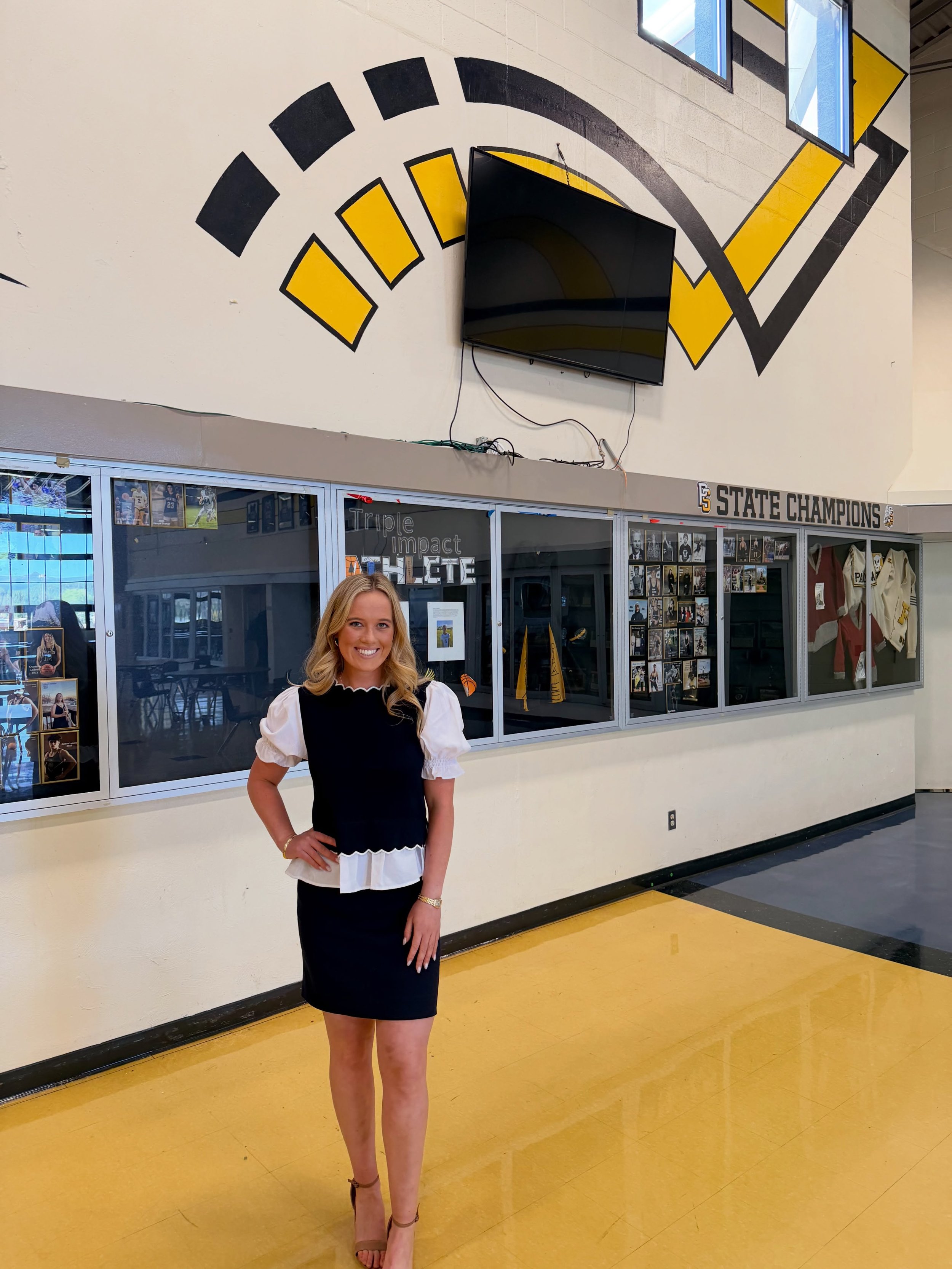
I'm Amy Wotovich, and I am on a mission to interview 100% of Team USA's 2026 Olympic and Paralympic athletes to create the most comprehensive mindset record of a single Games cycle. What do elite competitors actually believe about pressure, identity, failure, and joy? Cory Thiesse is one of hundreds of athletes sharing their unfiltered answers. Follow the journey!
