
No Fear, No Problem: The Mindset Behind Andrew Kurka's Paralympic Legacy
Andrew Kurka has a way of making the terrifying sound completely reasonable.
He’s a U.S. ski racer and 3x Paralympic medalist with a gold, silver, and bronze to complete the medal collection. He travels at 70 miles per hour with, as he puts it, knives on his feet. He has broken more than 20 bones over the course of his career. And when asked whether fear plays a role in what he does, he pauses.
"The funny thing about alpine ski racing is it's not about whether you're going to get injured, it's just when," he says. "We push the envelope so hard, and we do such a dangerous sport, that eventually it is just bound to happen."
And yet.
"I don't have any fear when I enter the course, mostly just because what's going to be is going to be."
At the 2026 Paralympic Winter Games in Cortina d’Ampezzo, his fourth appearance at the Paralympics, Kurka claimed bronze in the men's super-G sitting. The result of a career built on a goal-oriented mindset so deeply ingrained that pressure, fear, and noise simply have nowhere to land.
"Having fears are a distraction in those moments that makes it more likely for injuries and issues to happen. Fear is absolutely nothing more than a mental distraction that will get in the way of you achieving your goal on the mountain."
So what’s going through his mind up at the start gate?
"I'm calm. Loose as a goose. Until that bell dings. And then for the next minute and 30 seconds, I just focus on the goals, and I stay as focused as I can before I reach the end. And then when I cross the finish line, it's done. Okay, now it's time to have all the adrenaline, all the worry, can't believe I just did that, that was crazy. Sweet."
Race Number “21”
Kurka's framework for handling the weight of the Games is disarmingly simple. Before a Paralympic or World Championship race, while others feel the spotlight intensify and the stakes multiply, he reminds himself of one thing.
"I compete against all of these same people every single year at 20 World Cups before I ever go to the Games. As far as I'm concerned, it's just another race. It's race number 21 on my docket. I use the exact same competition mindset as I do at any other World Cup. I just have more support at the Paralympics.”
Kurka pauses and breaks down his mindset a step further.
"A lot of people get really wound up when they go to the Games, especially for the first time. There's so much coming at them that they don't find their own independent space, and it messes them up mentally," he says. "For me, I just treat it completely normally. I'm going to eat like I normally do. I'm going to do what I normally do. I'm going to focus on what I focus on."
His veteran approach to both mindset and the sport itself makes it no surprise when Kurka was awarded the opportunity to be the flag bearer for Team USA at the 2026 Closing Ceremonies.
The Architecture of a Season
Kurka's mental approach doesn't begin at the start gate. It begins at the start of the season with a deliberate, structured philosophy for how to peak at a certain point without burning out along the way.
"A lot of people have a tendency to enter the season and burn themselves out too soon. Making sure that you take your time at the beginning and don't focus on winning to then show up ready to go by the end of the season."
He breaks it down into three components that feed each other. First, a learning mindset.
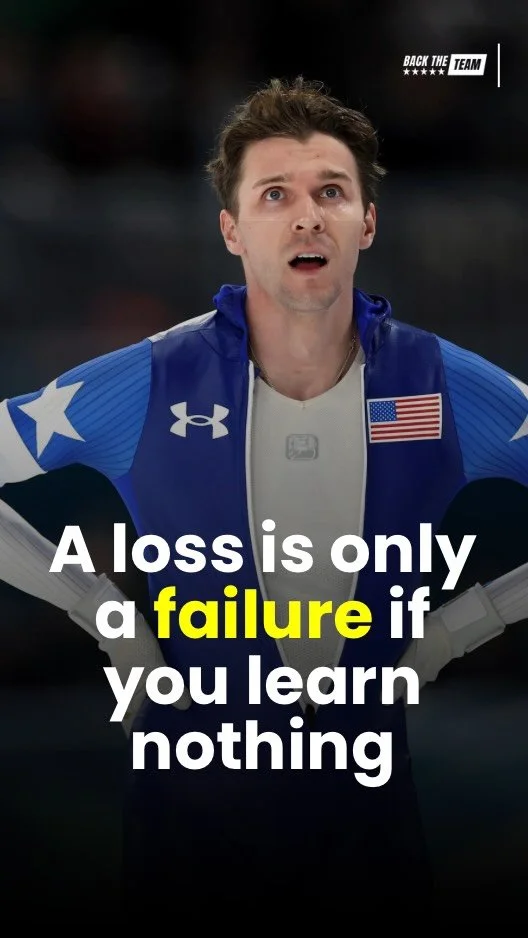
"Any failure is not a loss, it's a learning experience. I'm still growing and learning going into the Games, and that is my primary focus."
Second, perspective.
"Number two is remembering that ski racing is just a sport. Staying chill, staying relaxed about it, and knowing that the next important moment is on the way. These moments right now don't matter. They're leading into the moment that does."
Third (and this might be most surprising) distractions.
"Hobbies, or other healthy distractions, are extremely important. I have my business at home that keeps me distracted, keeps my mind elsewhere and not rooted in sport at all. I still stay rooted in myself, in my life, in the things that matter. But I allow myself to have that distraction."
He's seen what happens to athletes who lose that anchor. The sport starts to feel like everything. The pressure becomes existential.
"There’s a lot of pressure if you feel like your hinges on 1 minute and 30 seconds," he says candidly. "I've been through it a few different times. Sometimes weather, sometimes wind. Sometimes you don't have control over the loss or the victory you're about to receive. Sometimes you just get lucky, or you just get unlucky. Being able to accept those things…and knowing that there are other things in life…helps me substantially going into the Games."
Kurka’s Legacy
Kurka has announced that the 2026 Milan Cortina Winter Paralympics will be his last. A retirement that closes an illustrious ski racing career. Alongside the Paralympic gold, silver, and bronze is a mindset that made all of it look completely reasonable.
The legacy he leaves is a blueprint for every athlete who has ever stood at the top of a mountain and felt the weight of the moment trying to swallow them whole. The Kurka mentality:
1) Fear is a distraction.
2) It's just another race
3) And some things are outside your control. What's going to be will be.
ABOUT THIS SERIES
I'm Amy Wotovich, and I am on a mission to interview 100% of Team USA's 2026 Olympic and Paralympic athletes to create the most comprehensive mindset record of a single Games cycle. What do elite competitors actually believe about pressure, identity, failure, and joy? Andrew Kurka is one of hundreds of athletes sharing their unfiltered answers. Follow the journey!
