
5x Paralympic Gold Medalist Josh Pauls On What It Actually Takes to Stay on Top
Josh Pauls has five Paralympic gold medals. He was named the youngest captain in USA Sled Hockey history. He went to Milan with a split tendon in his wrist and played thirty minutes in the gold medal game.
When asked how his role has evolved over sixteen years, he laughs, "I thought this interview was supposed to be short!"
The Beginning
Pauls made the team in Vancouver, a youngster who was happy to be teammates with guys he'd watched compete at World Championships the year before. He won gold and came home to share the medal with kids he'd grown up playing with — including Jack Wallace.
Then at 24, ahead of the 2018 PyeongChang Winter Games, Pauls was named the youngest captain in program history.
"I wouldn't say it was a shock," he reflects. "But I think it was something that I wasn't really ready for, even if I might have thought I was."
Pyeongchang was the first test. They won, barely, after a tournament that exposed more cracks than the scoreboard showed.
"If anybody knows anything about the 2018 Games, it didn't exactly go our way until the very, very end."
Reflections from Gold
Gold medal in hand, Pauls came home and started asking the hard questions.
"I think there was a lot we could have cleaned up and a lot, culturally, that I wanted to improve. And a lot of that came through self-reflection."
What he landed on changed everything about how he leads.
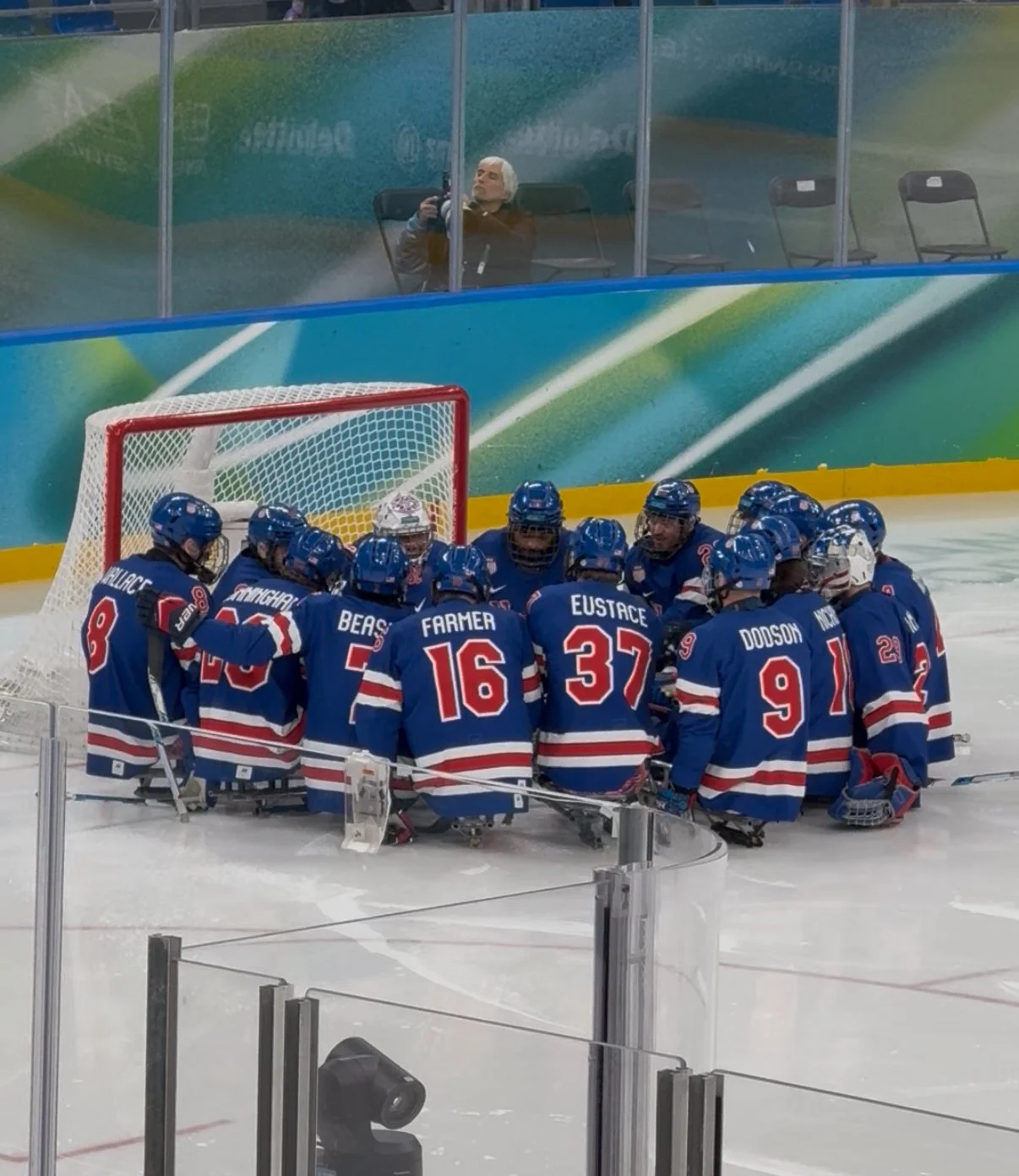
"My leadership style started as, let me take care of all this so that the other guys don't have to deal with it. And now it's…well, the guys are going to have to deal with it with me, because I can't handle it all by myself."
Photo Credit: Amy Wotovich / Back The Team
He started delegating and giving others ownership. And something happened that Pauls didn't fully anticipate: they grew together.
"That's been the biggest thing I've been most proud of," he says. "To watch the development of all the other guys."
You Have It, Or You Don’t
Ask Pauls what he looks for in a new player and he doesn't hesitate. It has nothing to do with skating or shooting.
"You can pretty much tell when somebody either has it or they don't. And when I say it, I don't mean any special talent. I mean a drive. They have to want to get better and constantly be asking for feedback."
He describes the culture the team has built today of older guys pulling younger ones into the fold and normalizing failure as a part of the process.
"You've got to be okay in practice getting scored on. I'd rather it happen in practice than a game. And I'm okay getting scored on in a game or a practice. Sorry, goalies."
Pauls continues.
"It's okay to ask questions. It's okay to fail. It's okay to struggle."
And if someone walks in the door without that mentality? Pauls is honest about what happens next. "My attitude will change real quick. I'm not going to be mean to you. But I'm certainly not going to put in the extra time and effort if I know it takes if you're not self-motivated to put in the time and effort."
It’s this mentality that enables a team to turn over its roster every cycle without ever losing its identity.
"It's hard to get on top," he puts simply. "But it's even harder to stay on top."
The Weight of Expectations
Milan arrived with a specific kind of pressure that Pauls had never quite felt before. The men's hockey team won Olympic gold. The women's hockey team won Olympic gold. USA Sled Hockey walked into the gold medal game as the favorite, expected to complete a sweep that would be historic.
And Pauls had a split tendon in his right wrist. He had battled through the entire training block, and wasn't (really) sure that he'd be able to shoot by the time the Games began.
"That was a big mental thing I had to fight through, because injury is something I'd really never dealt with before.There's all this fear going through a big tournament like the Paralympics," he says. "But my confidence comes through preparation."
For Pauls, the preliminary USA vs. China game was his turning point. Pauls put one in and felt his wrist hold.
With Free Bird echoing through the arena and the crowd loud, "There was this moment where I was like…oh, my wrist can handle this. I'm going to be okay. It's nice to be able to be there for the guys when they need you the most."
Pauls has won five Paralympic gold medals. He played the gold medal game in Milan with a split tendon in his wrist. He was named team captain at 24 and spent the next two quads refining his leadership philosophy.
Josh Pauls has become the backbone of USA Sled Hockey. What he's learned along the way might be more valuable than any Paralympic gold medal.

ABOUT THIS SERIES
I'm Amy Wotovich and I am on a mission to interview 100% of Team USA's 2026 Olympic and Paralympic athletes to create the most comprehensive mindset record of a single Games cycle. What do elite competitors actually believe about pressure, identity, failure, and joy? Josh Pauls is one of hundreds of athletes sharing their unfiltered answers. Follow the journey!
